 Posted by
 We have seen more extreme weather conditions including flash floods, lightning strikes, really hot or really cold temperatures, high winds and more in the past couple of years. One of the natural disasters to make sure you are prepared for, especially in the Kansas City Metro, is a tornado. We thought this would also be timely for all the fans of the FIFA World Cup 2026™ coming to town between June 11th and July 19th. (Many people coming to Kansas City have never experienced or even thought about the potential for a tornado.)
There are so many videos of tornadoes on YouTube. Watching any of these will show you the power and devastating destruction that a tornado can cause. And what’s worse, they can form abruptly and move incredibly fast over the ground. If you’re not prepared for a potential tornado, don’t know what the sirens mean, aren’t sure where to go… it’s a good time to fix that!
First, it’s worth reviewing the standard classification for tornado intensity. This includes a range of wind speeds as well as the type of damage that can be done.
Fujita Scale of Tornado Intensity
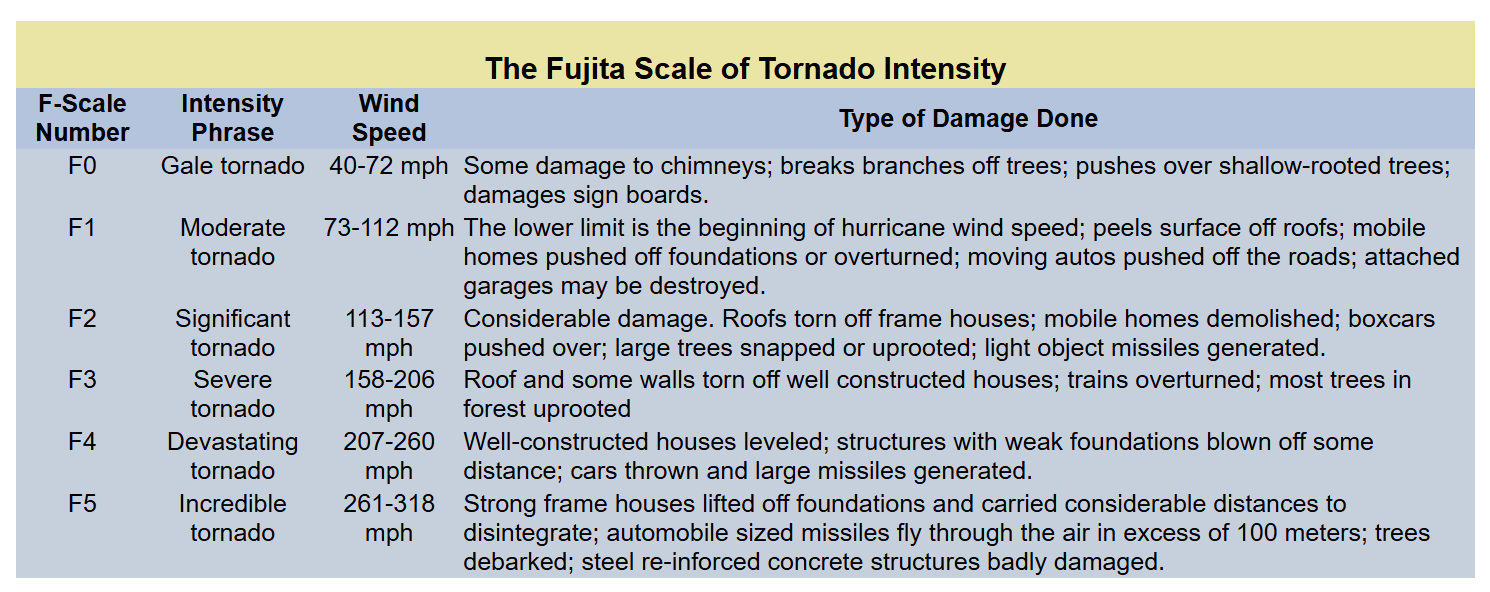
Source: Weather.gov
Notify JoCo Alert System
Next, it’s worth knowing about, and signing up for, the Notify JoCo service. NotifyJoCo is a free mass notification system designed to keep Johnson County Kansas residents and businesses informed of emergencies and certain non-emergency events.
By registering with NotifyJoCo and customizing your alert preferences, you’ll receive time-sensitive messages directly from the County, city, and participating public utilities within Johnson County, Kansas.
What to do During a Tornado
FEMA (Federal Emergency Management Agency) has a list of disasters and how to protect yourself and your loved ones during such an event. We recommend that you review what to do before, during and after a tornado so that you are better prepared. Whether you are in an office building, a school, or your home, it is your responsibility to know what to do in case a tornado develops and starts doing damage. The FEMA web site has an easy way for you to learn what to do located here.
Here is an excerpt from the FEMA site on what to do during a tornado.
| If you are in: | Then: |
|---|---|
| A structure (e.g. residence, small building, school, nursing home, hospital, factory, shopping center, high-rise building.) | Go to a pre-designated shelter area such as a safe room, basement, storm cellar, or the lowest building level. If there is no basement, go to the center of an interior room on the lowest level (closet, interior hallway) away from corners, windows, doors, and outside walls. Put as many walls as possible between you and the outside. Get under a sturdy table and use your arms to protect your head and neck. Do not open windows. |
| A vehicle, trailer, or mobile home. | Get out immediately and go to the lowest floor of a sturdy, nearby building or a storm shelter. Mobile homes, even if tied down, offer little protection from tornadoes. |
| The outside with no shelter. | Lie flat in a nearby ditch or depression and cover your head with your hands. Be aware of the potential for flooding. Do not get under an overpass or bridge. You are safer in a low, flat location. Never try to outrun a tornado in urban or congested areas in a car or truck. Instead, leave the vehicle immediately for safe shelter. Watch out for flying debris. Flying debris from tornadoes causes most fatalities and injuries. |
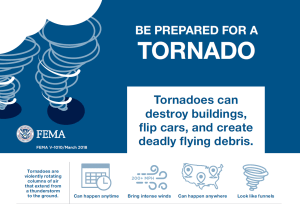
FEMA Tornado Preparedness Guide
Here is a great tornado preparedness guide from FEMA. It might be worth downloading this PDF Guide, printing it and putting it on your refrigerator. You may also want to review this with your family (spouse, kids) to make sure everyone knows what to do before the threat of a tornado is real.
Being Prepared for Extreme Weather is a Good Thing
- Knowing evacuation routes, having a plan, and knowing exactly where to seek shelter (e.g., a reinforced safe room or basement) keeps you out of harm’s way during tornadoes, floods, or severe storms.
- Stashing accessible supplies—like stored drinking water, non-perishable food, flashlights, and a charged power bank—ensures survival if utilities, supply chains, or grocery stores are knocked out for days.
- Having a practiced family communication plan and emergency supplies reduces the fear and anxiety that often accompany sudden, chaotic disasters.
We hope that we won’t have to put any of these plans into place this summer. But if extreme weather does happen, you’ll be more prepared now that you’ve thought about before, during and after with the people you care about!

