 Posted by
 By Kandy Meehan, President of Home Rental Services
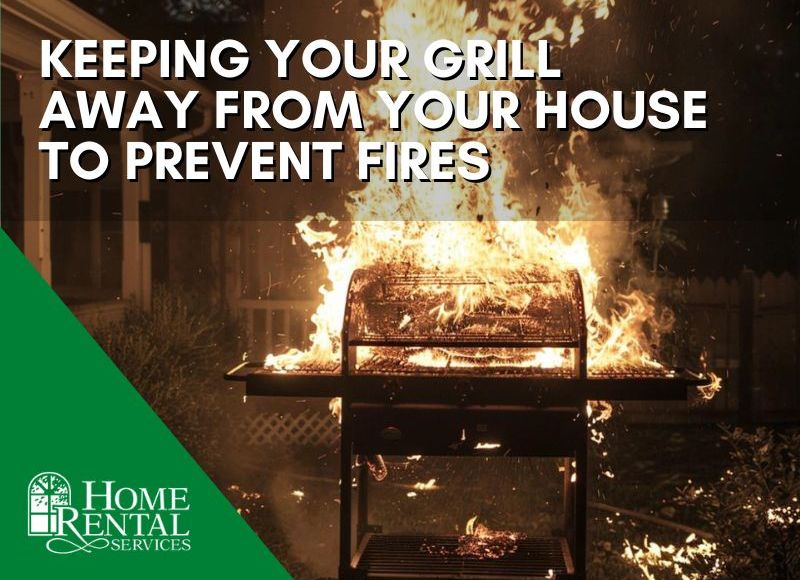
Grilling is one of the joys of summer, bringing friends and family together over delicious meals cooked outdoors. There is something special about grill marks in a good burger or chicken sandwich. Even though grilling is fun and tasty, it also poses certain risks, particularly when it comes to fire safety.
One crucial safety measure that is often overlooked is the positioning of the grill in relation to your home. Many people don’t realize that keeping your grill too close to your house can significantly increase the risk of fire. In this blog post, we’ll explore why it’s essential to keep your grill a safe distance away from your house and the potential consequences of not doing so.
Understanding the Risks
Grills, whether charcoal, gas, or electric, generate intense heat during cooking. This heat can easily ignite nearby combustible materials, such as siding, wooden decks, or overhanging branches. When a grill is positioned too close to a structure, the risk of fire spreading quickly becomes a serious concern. According to the National Fire Protection Association (NFPA), grills were involved in an average of 9,079 home fires per year between 2017 and 2021.
Safe Distances and Guidelines
Maintain a Minimum Distance: Experts recommend keeping your grill at least 10 feet away from your house or any combustible structure. This distance helps to reduce the likelihood of radiant heat or stray embers igniting nearby materials.
Clear Surroundings: Ensure there are no overhanging branches, dry grass, or other flammable materials near your grill. Embers can travel surprisingly far and ignite materials that are not in direct contact with the grill itself.
Proper Ventilation: If you’re using a gas grill, make sure it’s positioned in an open, well-ventilated area. Gas leaks can occur, and having proper ventilation reduces the risk of a dangerous buildup of gas fumes.
Stable Surface: Always place your grill on a stable, level surface. This helps prevent accidental tipping or shifting of the grill, which could potentially cause spills or fires.
Potential Consequences
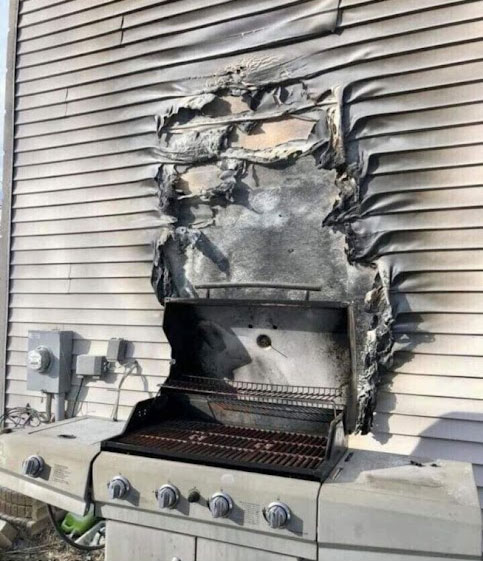
Structural Damage: Radiant heat from a grill can cause siding to warp, paint to blister, and windows to crack. In extreme cases, it can even lead to structural fires that endanger the entire home.
Risk of Injury: In addition to property damage, fires caused by grills can result in injuries to occupants of the home or neighboring properties. Burns, smoke inhalation, and other fire-related injuries are all potential risks.
Insurance Implications: Insurance policies typically cover damage from grill-related fires, but premiums can increase following a claim. Moreover, repeated claims or severe damage could lead to policy cancellation or difficulty in obtaining coverage in the future.
Best Practices for Safe Grilling
Beyond maintaining a safe distance from your house, here are some additional tips for safe grilling:
Regular Maintenance: Keep your grill clean and well-maintained. Remove grease buildup, which can ignite and cause a fire.
Supervision: Never leave a grill unattended while it’s in use. Even a momentary distraction can lead to a dangerous situation.
Keep a Fire Extinguisher Handy: Have a fire extinguisher rated for all types of fires (ABC) nearby and know how to use it. In case of a small fire, you can act quickly to prevent it from spreading.
Children and Pets: Keep children and pets away from the grill area. Establish a safety zone to prevent accidental burns or injuries.
By keeping your grill at least 10 feet from your house and following recommended safety guidelines, you can enjoy your outdoor cooking experience with peace of mind. Remember, the key to a successful grilling season is not just in the delicious meals you prepare but also in ensuring the safety of your home and loved ones!
 Home Rental Services Blog